.svg)





Expat entrepreneur guide: build & run a business abroad without losing your mind

Being an expat entrepreneur is not the same as being a tourist with a laptop.
You need to pick a country, navigate visas and taxes, hiring people in a language you might not fully speak, and trying to build something that works even when you’re on a plane or in another city.
This guide is for expat entrepreneurs and soon‑to‑be expats who want more than inspirational stories.
Key Takeaways:
- It is rarely the idea that breaks an expat entrepreneur; it is the operational friction of running a business in a foreign legal, banking, and language context.
- Choose your country like a business decision: market demand, registration ease, visas, taxes, and double-taxation treaties matter more than lifestyle alone.
- Structure and banking first: local legal/tax expertise pays for itself when you operate across two systems, and fintech (Wise, Revolut, Payoneer) smooths multi-currency flows.
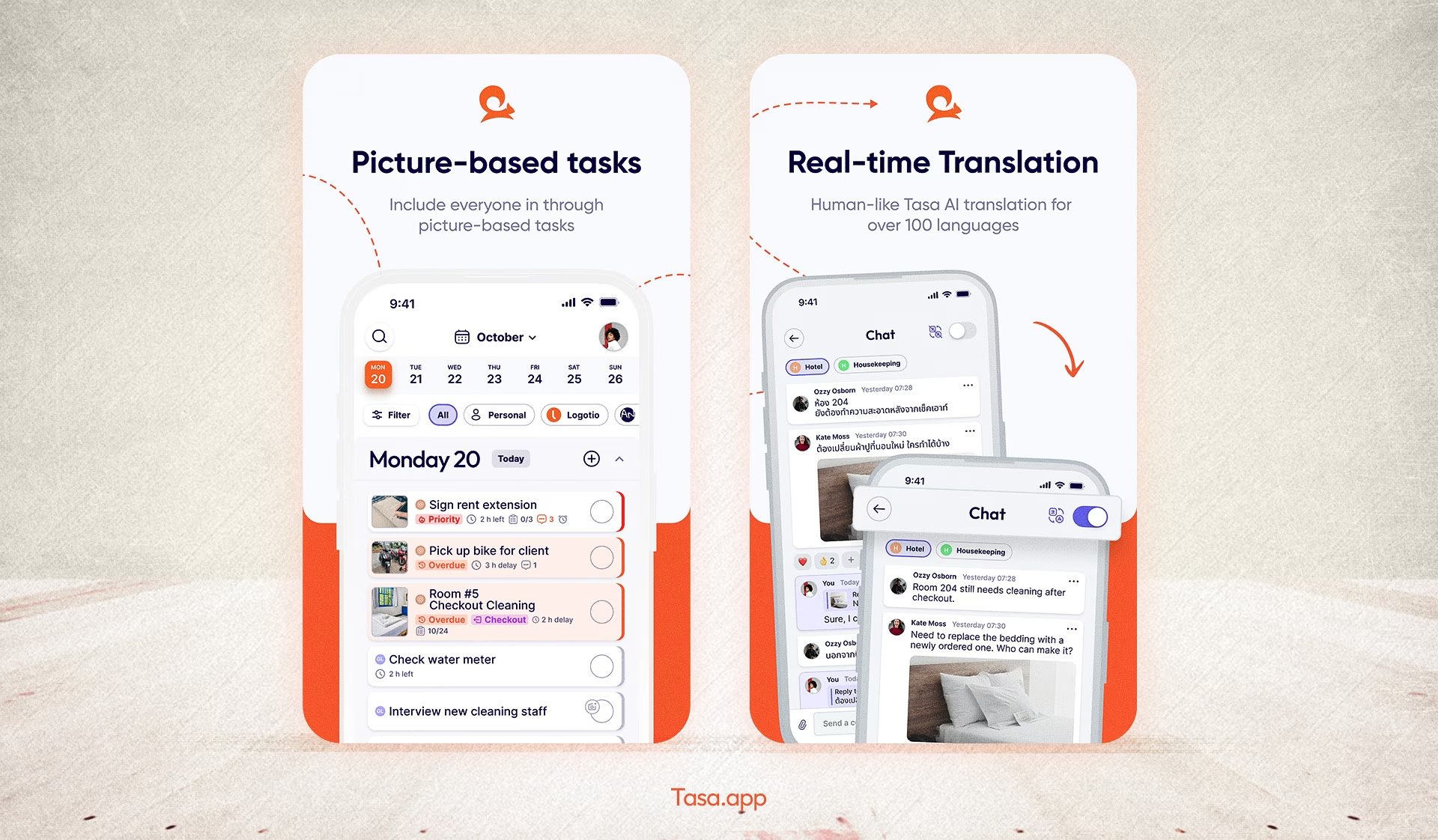
- Split your tooling: a digital HQ (ClickUp, Notion, CRM) for knowledge workers, and picture-based tasks with AI translation and photo proof for local frontline staff.
- Scale only when the first location runs without you: documented processes, local managers, and stable quality are the precondition for a second country.
1. Global trends shaping expat entrepreneurship
Several overlapping trends are driving the current wave of expat entrepreneurship:
Remote work normalization
Many professionals realized they don’t need to live where their clients are. That opened the door to starting businesses from Lisbon, Dubai, Mexico City, or Bali while serving global markets.
Emerging markets as opportunity hubs
Countries in Southeast Asia, Latin America, and parts of Africa are growing quickly, with rising middle classes and under‑served niches.
Digital nomad and startup visas
More countries now have digital nomad visas, entrepreneur or startup visas, or e‑residency programs that make it easier to set up and run a company from abroad.
Immigrant and expat over‑representation in entrepreneurship
Data from multiple OECD and country‑level studies consistently show that immigrants and expats are disproportionately likely to start businesses in their host countries.
As Anne‑Marie Côté, puts it:
“Expat entrepreneurs consistently adapt to new environments and turn challenges into growth opportunities.”
For a deeper dive into which countries are leading the way, the Opinium Global Entrepreneurship Index 2025 ranks 137 nations by their entrepreneurial appeal.
Motivations and challenges of expat entreprenuer
Common motivations include freedom and autonomy, access to new or less crowded markets, a different lifestyle (climate, safety, family reasons), and building something global by design.
Key challenges:
- Language and cultural barriers
- Legal and regulatory complexity
- Financing and banking hurdles
- Managing teams you can’t physically watch
It’s rarely the idea that breaks an expat entrepreneur. It’s the operational friction of running something serious in a foreign context.

2. Choosing the right country as an expat entrepreneur
Where you base yourself can help you or hurt you for years.
Key criteria to assess
When evaluating destinations, focus on:
Market potential:
Is there real demand for what you offer locally or regionally?
Legal environment:
How easy is it to register a company, open bank accounts, sign leases, and hire?
Visas and residency:
Are there entrepreneur/startup visas, investor visas, or digital nomad options that transition into residency?
Taxes:
Corporate tax rate, personal tax rules, and double taxation treaties with your home country.
Language and culture:
Can you operate in English (or your main language)?
Are you willing to invest in local language skills or invest in tools bridge that gap?
Cost of living and lifestyle:
How far does your runway go?
Is this a place you (and your family) can realistically enjoy and sustain?
Popular destinations for expat entrepreneurs (2025–2026)
Frequently cited hotspots include:
Portugal:
Golden Visa (changing, but still influential), vibrant tech communities in Lisbon and Porto, moderate cost of living relative to Western Europe.
Germany:
Strong economy, deep tech hubs (Berlin, Munich), structured legal and funding ecosystem.
Singapore:
Pro‑business environment, EntrePass for tech/startup founders, world‑class infrastructure.
UAE (Dubai, Abu Dhabi):
Tax incentives, free zones, strong global connectivity.
Mexico and Vietnam:
Fast‑growing markets, relatively low cost of living, rising startup scenes.
According to the Expat Insider 2025 Survey Report, these countries rank high for expat entrepreneur satisfaction, access to opportunities, and quality of life.
Legal, tax, and structure basics
Key points include:
Business registration:
Some countries offer fully digital company formation; others require in‑person steps.
Business structures:
Options like LLC, limited company, sole proprietorship, or branch office each affect liability, tax, and funding.
Taxation:
You may be taxed in your host country, home country, or both (with relief via double tax treaties).
Visas:
Check minimum capital requirements, revenue or job creation expectations, and family/dependant conditions.
Bottom line: talk to local legal and tax experts before committing. DIY only goes so far when operating in two (or more) tax and legal systems.
3. Navigating legal, financial, and administrative hurdles
You can have the best idea in the world, but if your structure is wrong, banking is messy, and your compliance is shaky, you’re only building on sand.
Business structure and registration
Common options include:
- Limited company / LLC:
Limited liability, good for most startups and service businesses. - Sole proprietorship:
Simple to set up; higher personal risk. - Branch office:
Extension of a foreign entity; complex but sometimes necessary.
What to do:
- Research typical structures for your sector in your chosen country.
- Confirm whether foreigners can own 100%, capital requirements, and director/resident director rules.
Banking, payments, and currency
Pain points:
- Traditional banks often want local residency or long lists of documents.
- Multi‑currency flows (clients in USD/EUR, expenses in local currency).
- Managing payroll across borders.
Solutions:
- Use local banks for credibility and some operations.
- Use fintech (Wise, Revolut, Payoneer, etc.) for multi‑currency and cross‑border payments.
- Integrate with bookkeeping so you’re not reconciling manually.
Tax, compliance, and reporting
Checklist:
- Register for local taxation where required.
- Understand your home country’s reporting obligations (e.g., US citizens must still file to the IRS).
- Track income and expenses clearly by entity and territory.
- Don’t ignore employment or contractor classification rules in your host country.
Investing modestly in a cross‑border accountant early will save you a lot later.
4. Building and managing a global + local team
This is where many expat entrepreneurs struggle most and where Tasa can directly help.
Recruiting local and international talent
You might hire local staff for hospitality roles, cleaning and maintenance, shop or site staff, on-the-ground operations.
Hire international or remote staff for: marketing, development, design, and sales.
Key considerations:
- Compliance with local labor law
- Contracts and clarity about expectations
- Language skills and cultural fit
Different markets behave differently:
- Vietnam: flexible labor laws, young tech talent, English improving but variable.
- Germany: well-defined labor protections, more structured hiring processes, German often important outside tech.
A good expat entrepreneur adapts hiring strategies to local norms instead of copying home-country habits blindly.
Cross-cultural communication and leadership
You lead across languages, work styles, expectations around feedback and authority.
Principles:
- Default to clear, simple language in English or a shared language.
- Encourage questions; assume some misunderstandings are hidden.
- Learn key cultural basics: holidays, communication styles, how people say “no”.
Erin Meyer’s line is useful here: “Cultural intelligence is the new leadership superpower.”
The more you invest in understanding how your team sees the world, the less friction you’ll face.
Accountability, productivity, and workflow solutions
For your knowledge work (remote marketers, devs, designers) tools like ClickUp/Asana/Notion generally works well for projects and tasks management
For your local and frontline staff (cleaners, hostel staff, shop teams, construction workers, drivers):
Spreadsheets and text-heavy apps usually fail because:
- People may not read lengthy instructions in your language.
- Most works don't have access to laptop on duty
- Not everyone is comfortable with complex interfaces.
This is why Tasa is designed for expat entrepreneurs. Section 5 and 6 describe this practically.
5. Running a small hotel day by day with Tasa
A hotel is where everything from Section 4 gets concrete. You have local housekeeping and maintenance staff, you may not share a language with all of them, and the standard has to hold every single day, whether you are on site or on a plane.
A small hotel runs on two types of work: repeated tasks that happen on a schedule, and ad-hoc tasks that appear without warning. Most tools handle one well and the other poorly. Tasa handles both.
The daily rhythm: your hotel housekeeping checklist
Room turnovers, bathroom cleaning, linen changes, minibar restocking. These tasks follow the same standard every time, which is why a paper hotel housekeeping checklist fails: it depends on everyone reading, remembering, and caring the same amount.
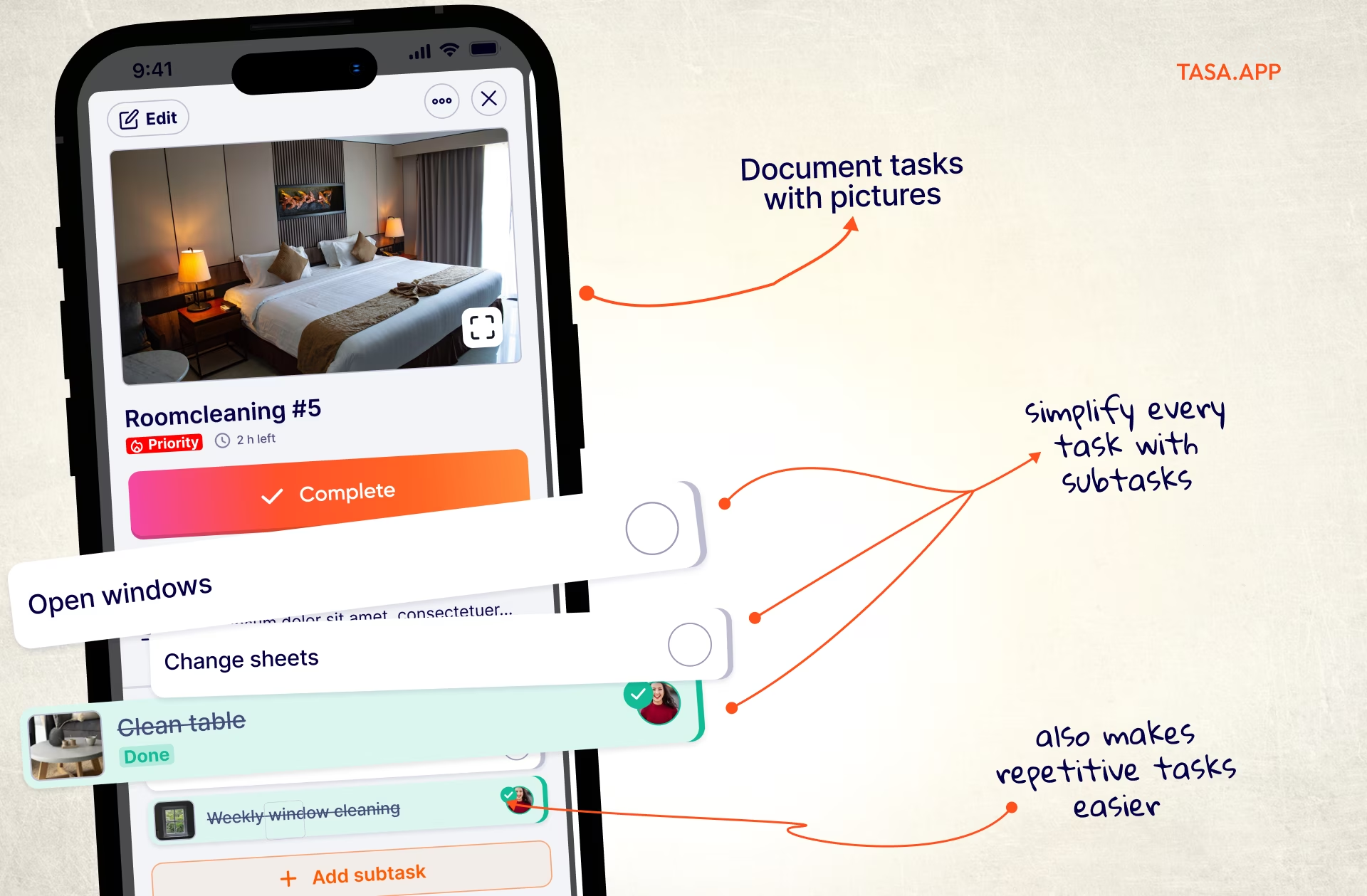
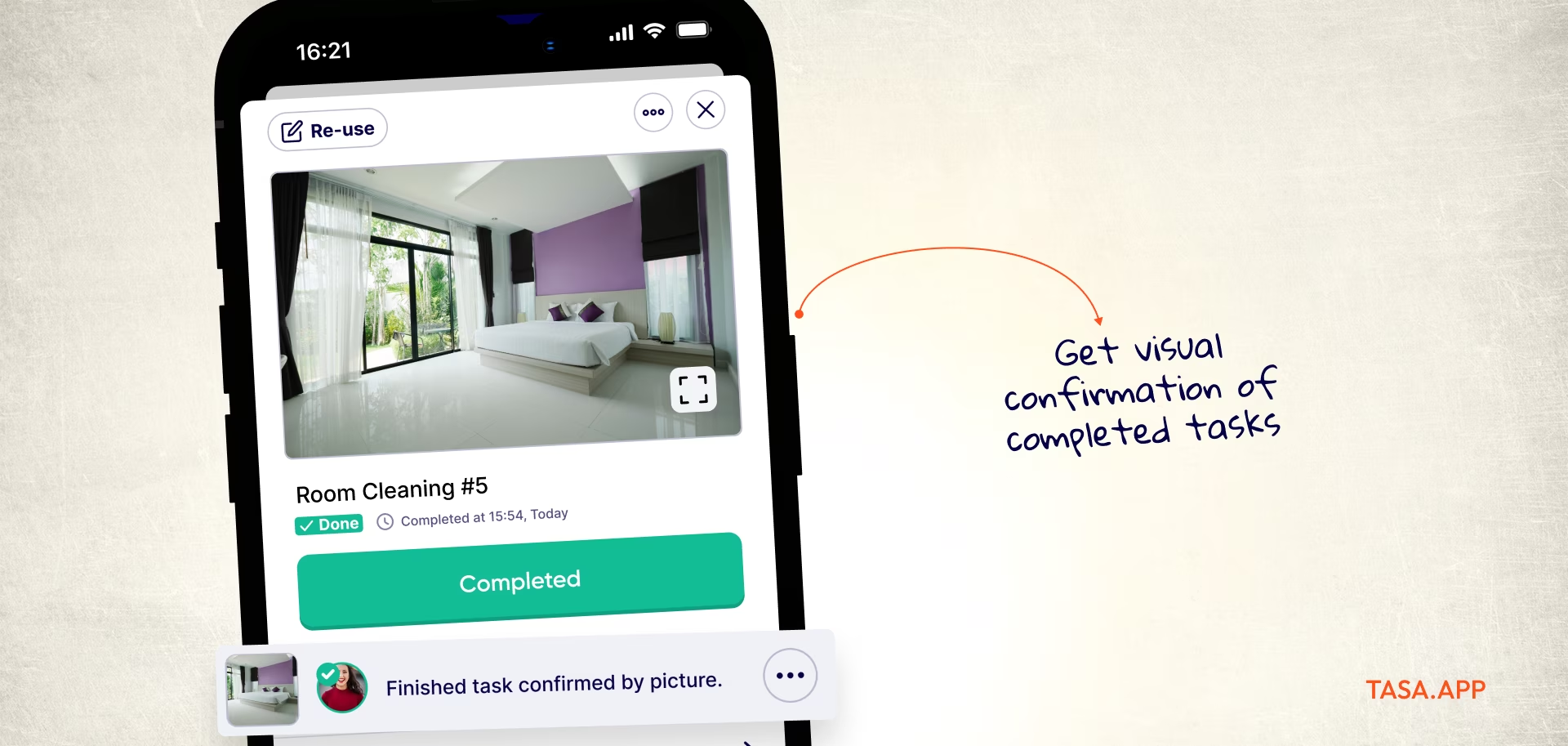
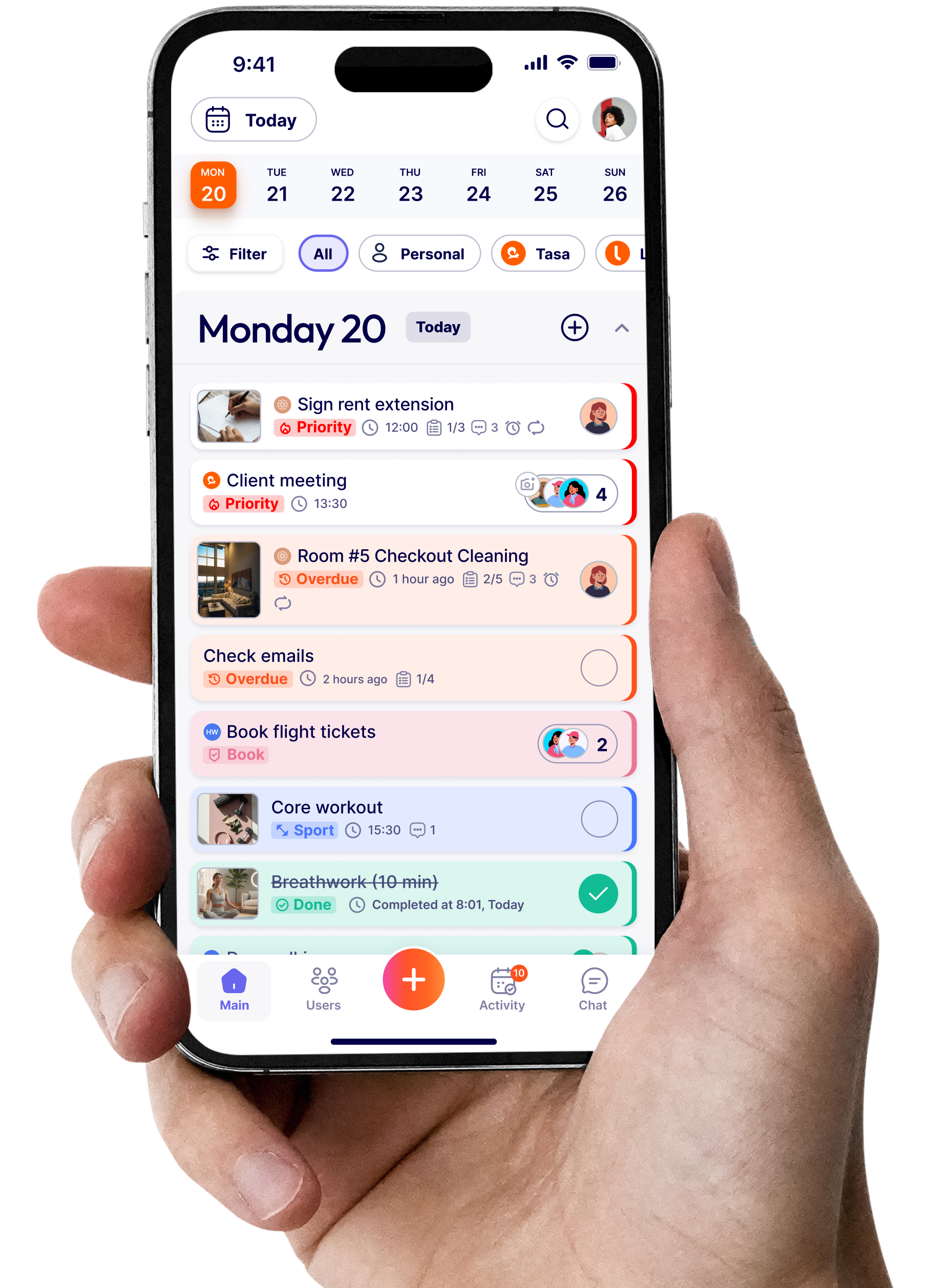
With Tasa, you build a picture checklist for each routine. Take a photo of a perfectly made bed, a stocked minibar, a clean bathroom. That photo becomes the standard your housekeeping team works toward, no matter which language they speak.
You break each routine into simple steps, five to ten per room. The housekeeper opens the task, sees the photos, completes each step, and takes their own photo when the room is done. It is a hotel room cleaning checklist that checks itself: the photo is the proof, not a ticked box.
You set the pattern once, daily, after checkout, or on a custom schedule. Tasa creates the tasks automatically. No re-entering them every morning.
Ad-hoc tasks: the unexpected problems
A guest requests an extra pillow. A light bulb burns out in the hallway.
With Tasa, you take a photo of the problem, circle the exact area if needed, and assign it to the right person with a tap. They see the issue, fix it, and send a photo back when done.
No phone calls. No WhatsApp threads. No forgotten requests buried in a chat history.
Real-time translation, built in
Your housekeeping team may speak Arabic, French, or Spanish. Your maintenance contractor may speak Portuguese. You speak English.
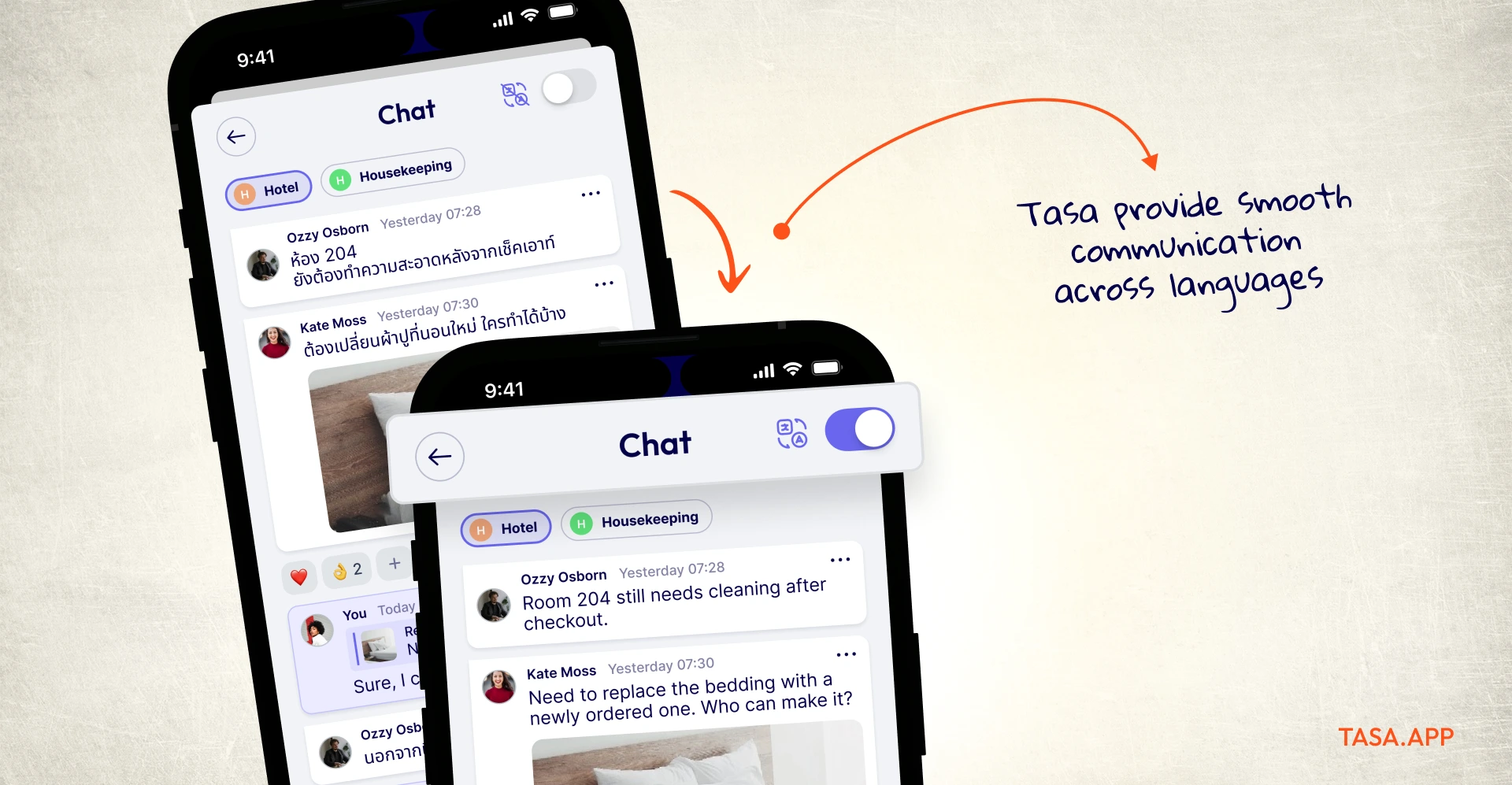
Tasa translates every task, comment, and chat message in real time, in over 100 languages. You write the instructions in English. The housekeeper reads them in their preferred language. They reply in their language.
No translator. No third-party app. No back-and-forth.
Separate workspaces keep teams focused
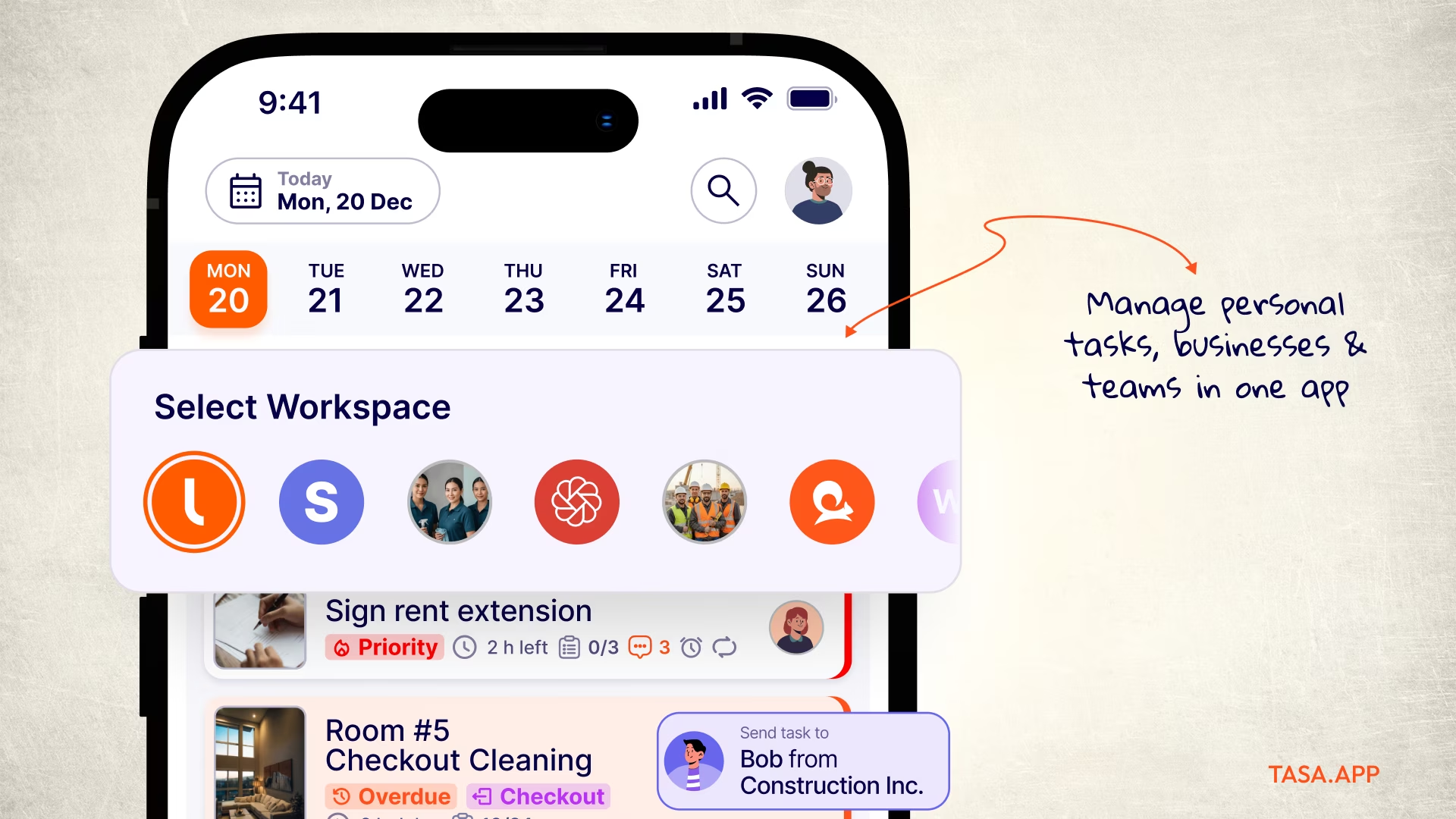
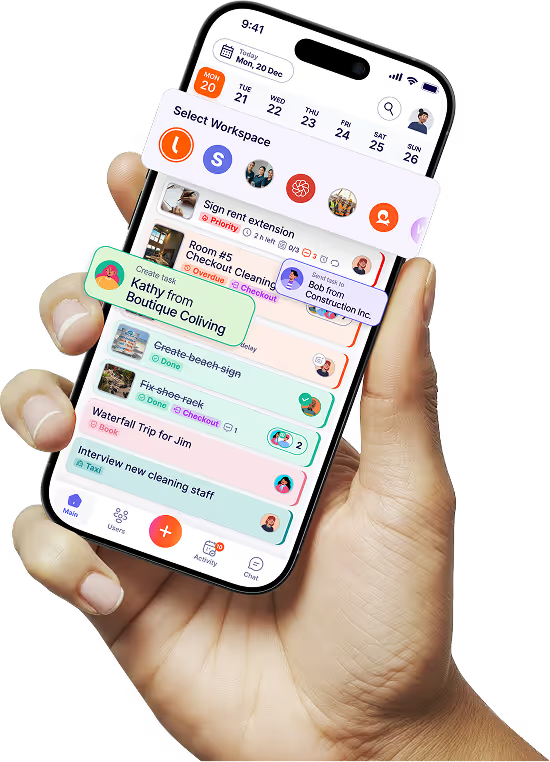
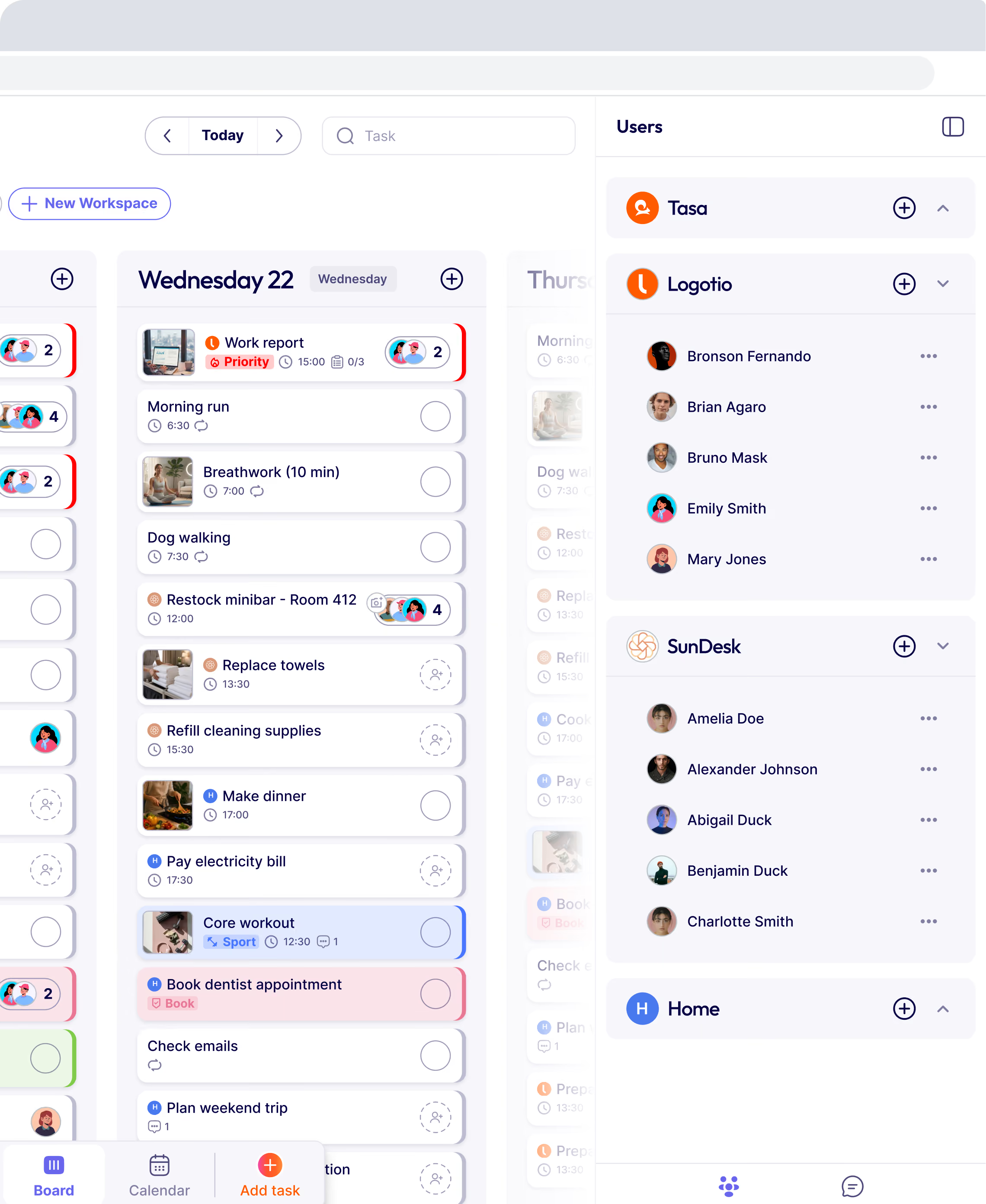
Create one workspace for housekeeping, another for maintenance, another for the front desk. Each team sees only their tasks. Nothing gets mixed up.
You switch between workspaces with a tap. The housekeeping lead sees room tasks. The maintenance lead sees repair tasks. The front desk sees guest requests. Everyone works from the same app without stepping on each other.
What you see as the owner
From your phone, you see which rooms are done, which tasks are late, and which photos show quality issues. Every completed room comes with a photo, so a quick hotel room inspection takes seconds instead of walking floor by floor. You spot problems before guests complain, and you hold a visual record for every room, every day.
You can be in another country. You can be asleep. The work still gets done, and you still have proof.
Onboarding new staff in minutes
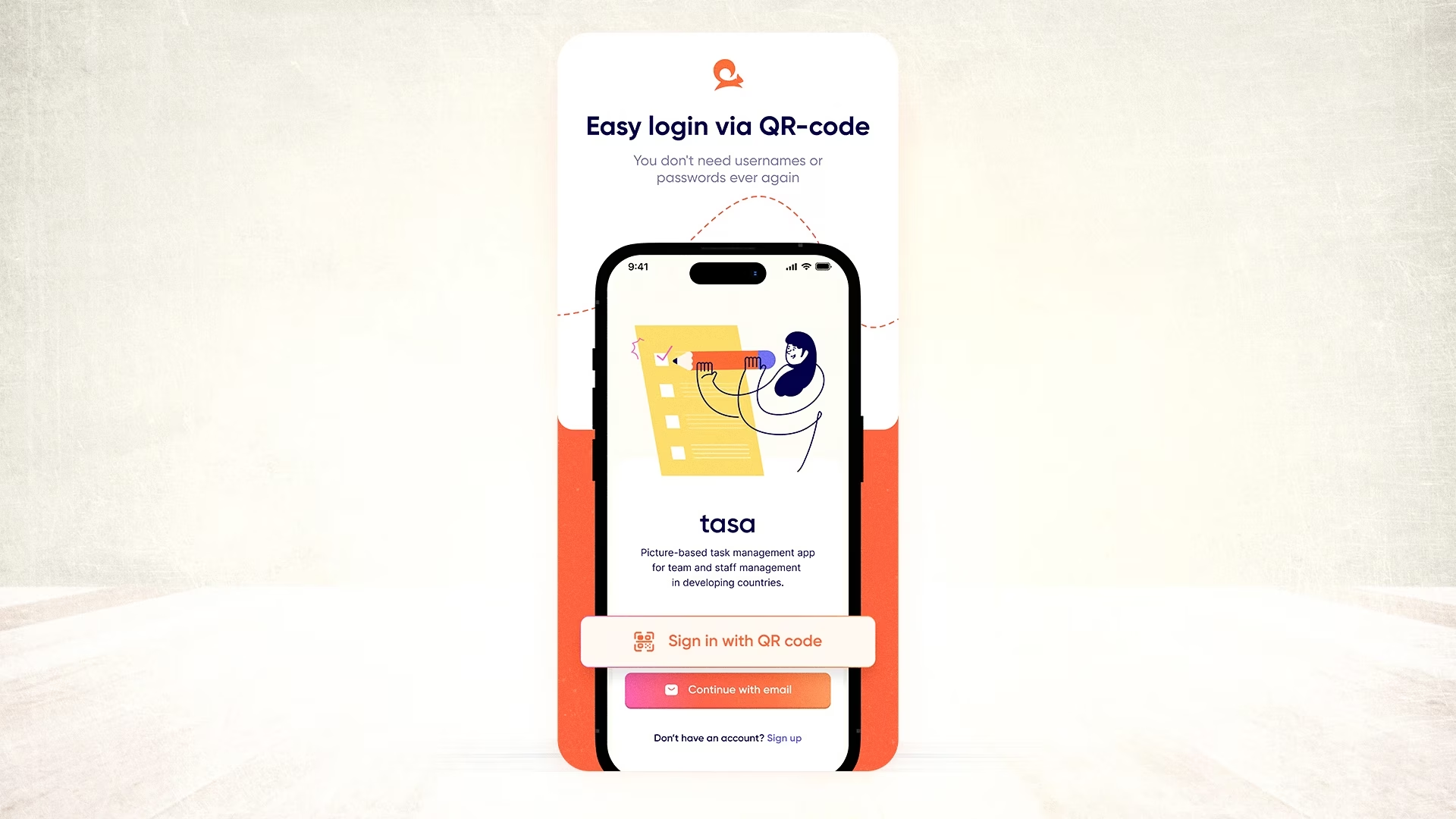
Annual staff turnover in hospitality regularly runs above 70%, so hiring never really stops. A new housekeeper scans a QR code, sees today's picture tasks, and starts working. No training manual, no shadowing, no language barrier. A seasonal hire becomes productive on day one instead of day five.
It works in practice, not just in theory. SunDesk, a coliving space in Morocco, switched their multilingual team to picture tasks and reports a 60 percent efficiency increase. Their founder said she no longer asks staff to translate for her: she sends the work as pictures and manages remotely.
6. Managing a small restaurant with Tasa
A coffee shop or small restaurant lives on checklists. Opening routine, espresso machine cleaning, pastry display setup, closing procedures. Your restaurant opening and closing checklist is too important to forget, but written checklists get ignored, verbally explained routines get half-remembered, and new staff learn by watching until the standard slips.
Opening and closing routines, made visual
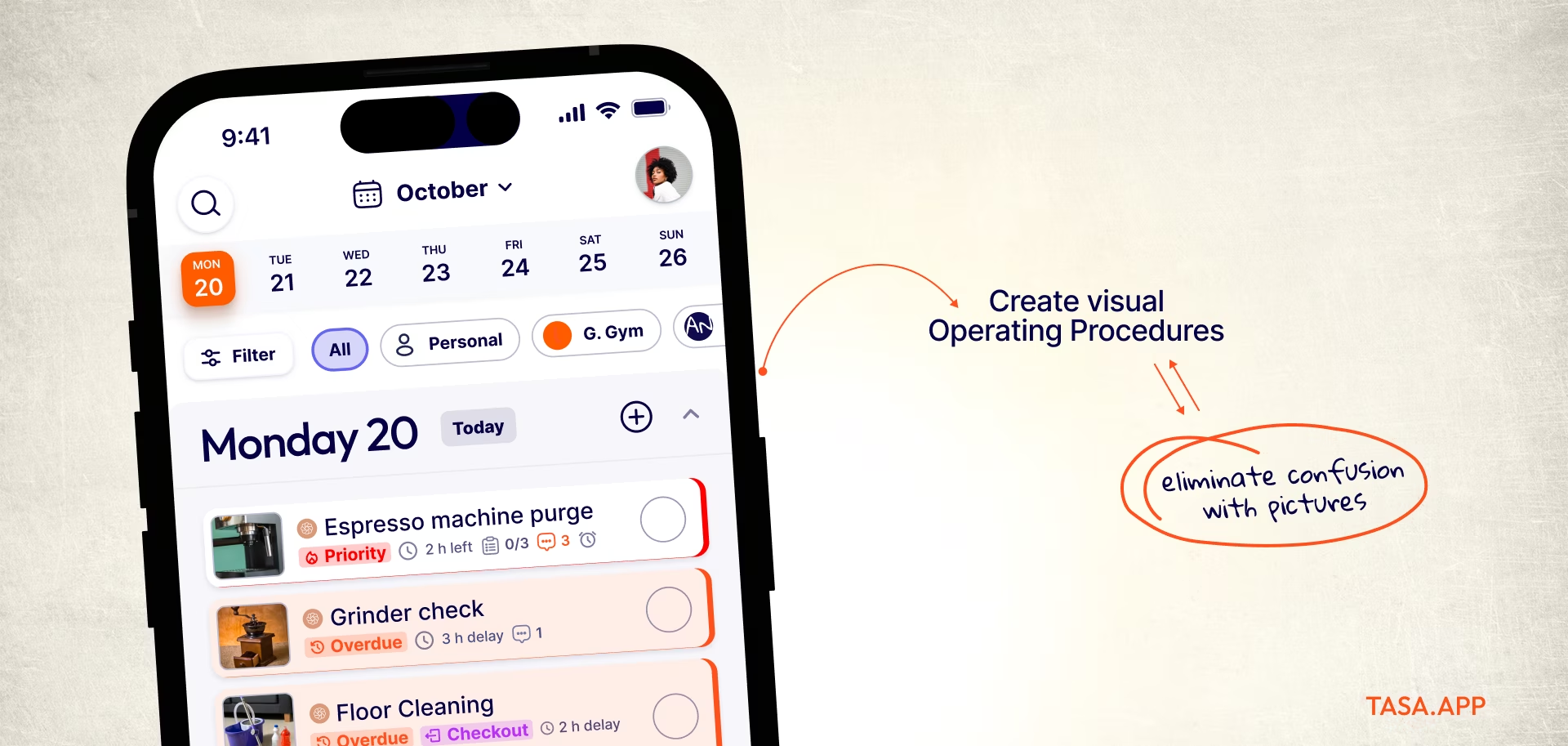
Your opening routine probably has fifteen steps: the espresso machine gets purged, the grinder gets checked, the pastry case gets arranged, the register gets counted, the floor gets swept.
With Tasa, each step has a photo. Staff see exactly how the espresso machine should look after cleaning, or how the pastry case should be arranged. They follow the pictures, take their own photos when done, and you review from anywhere.
Picture-back proof for quality control
This is the feature that changes how you manage. Staff cannot mark a task complete without sending a photo taken live in the app. No pulling an old picture from the gallery, no pretending. You see the cleaned machine or the stocked display as it is right now.
You know the work was done to standard without being there. No more walking in at 6 AM to check whether the closing shift actually cleaned the milk frother.
Food safety and audit trails
For restaurants, food safety matters. Temperature logs, storage procedures, cleaning schedules. Tasa creates a visual record: staff photograph the fridge temperature display, the date labels on containers, the sanitized prep surfaces. Every photo is stored with the task and timestamped.
When an inspection happens, you show the record. When a customer asks about your procedures, you have evidence. This is not just organization. It is risk management.
Training new staff without repeating yourself
New hires learn faster with pictures. They see how the espresso machine should be cleaned, how the sandwich station should be arranged, how the closing checklist works.
Onboarding works exactly as in the hotel above: a new barista or prep cook scans a QR code and starts in 60 seconds. No passwords, no email, no app-store signup.
They open the app, see picture tasks, and begin. Your experienced staff spend less time explaining, your new staff become independent faster, and the standard stays consistent no matter who is working that day.
Multiple shifts and locations
If you run more than one location, create a separate workspace for each, just like the hotel teams above: one for the downtown cafe, one for the airport kiosk, one for the catering operation. Each location has its own checklists, staff, and photo records.
You switch between them with a tap and see which shifts completed their routines and which ones missed steps.

What this means for your business
Fewer forgotten tasks. Fewer quality complaints. Faster onboarding. Clear records for audits and inspections. Your staff know what to do and how to do it, and you see that it is done correctly, from anywhere, in any language.
7. Funding, scaling, and sustaining your foreign business
Funding options
Typical paths for expat entrepreneurs:
Bootstrapping:
You grow from revenue. Most common, especially for services like agencies, hostels, cleaning, and consulting.
Angel investors:
Often local or diaspora investors who understand your market.
Venture capital:
More relevant if you’re building a tech or scalable platform startup. Strong ecosystems in places like Berlin, London, Singapore, Dubai.
Grants and programs:
Some governments provide non-dilutive support for foreign founders (e.g., Singapore’s EDB programs, Portugal’s tech initiatives).
Networks and partnerships
Your network may be your strongest asset:
- Join local chambers of commerce and business associations.
- Attend meetups for expat founders and local entrepreneurs.
- Participate in accelerators or incubators that welcome foreign founders.
- Engage in online communities (Indie Hackers, niche Slack groups, industry forums).
Good networks help with market understanding, supplier/partner introductions, talent referrals, and funding intros.
Marketing and customer acquisition
Localize your brand and messaging (not just language but tone and channels). While understanding which platforms matter in your market:
- In Southeast Asia (Facebook and YouTube)
- Europe (Google Ads, Instagram, LinkedIn)
- Latin America: WhatsApp, Instagram, TikTok.
Mix digital marketing (SEO, PPC, content), partnerships, community events or local presence with your marketing strategy. Your expat angle can be a strength (global quality, new ideas) or a weakness (perceived as disconnected). The way you engage with the local community will tilt that balance.
Scaling operations across borders
Before you expand into a second or third country, ask:
- Is the first location truly stable?
- Have you documented your processes?
- Can local managers run day‑to‑day without you?
Scaling is reproducing quality reliably while increasing revenue
This is where combining clear playbooks (docs and templates), good “digital HQ” (project + CRM) and visual task systems like Tasa (for on-the-ground teams) lets you operate across cities or countries without burning out.
8. Measuring success and adapting
Track basic KPIs such as revenue growth, profit margins by location, customer retention or repeat bookings, staff turnover, task completion and quality rates (especially helpful with Tasa).
Be willing to adjust:
- Country if the environment changes
- Business model if demand is different than expected
- Team structure if current patterns are too centralized on you.
The best expat entrepreneurs don’t cling to version 1 of their plan; they iterate based on data and local reality.
What being an expat entrepreneur today means
Being an expat entrepreneur in today's world means thinking globally, acting locally, and building systems strong enough that your business can function when you’re not physically present become you have Tasa for team accountability.
If you:
- Choose your base country with intention
- Get your legal and financial foundations right
- Invest in networks and culture
- And use tools that respect the realities of multilingual, frontline work
Give yourself a real shot at not just surviving abroad, but also building something durable that benefits you, your team, and the communities you operate in.
This is where logotio.agency excel. With over 15 years of experience powering successful digital marketing campaigns, they make marketing your business easier so you can focus on operations.
Latest News



Have questions?
.svg)
Team management, simplified.

“It affects my personal life a lot. I can manage my team and my work remotely, so I have more time being a mother.”
