.svg)




Language barriers in multilingual business: Stop losing deals, trust, and time

In a global, remote, and fast-moving workplace, tackling language barriers in business is core to sustainable growth, smooth collaboration, and a great customer experience.
Key takeaways
- Language barriers in business are any differences in spoken or written language, jargon, or non-verbal signals that block clear communication, and they cost deals, safety, and time.
- Most so-called language problems are cultural misunderstandings wearing a language mask, so fixes must address culture too.
- The proven fix runs in layers: leadership commitment, a flexible common business language, role-based language training, translation and visual tools, and measurement.
- Visual, multilingual task systems like Tasa help frontline teams act correctly without depending on long written instructions.
What are language barriers in business?
At their core, language barriers in multilingual business are anything that blocks clear communication because of differences in spoken or written language across multiple languages, non-verbal signals, and body language.
They show up in subtle and obvious ways:
- Confusing emails or Slack messages
- Misunderstood instructions on job sites
- Customer conversations that go sideways
- Silence in meetings because people are afraid to speak up
The role of culture in miscommunication
Language and culture are inseparable. Many language problems are actually cultural misunderstandings wearing a language mask.
For instance:
- In some cultures, silence signals agreement. In others, it signals polite disagreement.
- A nod can mean “I hear you”, not “I fully agree”.
- Direct criticism in one culture is “honesty”, but in another, it’s rude and shuts people down.
Without cultural awareness, leaders often misread these signals and assume laziness, incompetence, or disrespect where there is simply a cultural mismatch.
How language barriers in business show up
Language barriers in business don’t just make things a bit slower. They cause visible damage:
- Lost deals due to misunderstood terms or unclear proposals
- Botched service delivery because instructions weren’t clear
- Safety incidents when training isn’t understood
- Customer churn when support agents can’t explain solutions simply
Typical symptoms include:
- Repeated questions about the same tasks
- Ghost compliance (checklists ticked, but work not done correctly)
- Teams blaming the other office or foreign team, a pattern we break down in how multilingual teams drive business success
- Managers spending hours re-explaining what should be simple, all due to language friction nobody has named yet

Steps to stop language barriers in multilingual business
Step 1: Assess your organization’s language landscape
You can’t fix what you haven’t mapped. Start by understanding where your language barriers in business actually live.
Run a simple language audit. Map:
- What languages are spoken in your organization
- Proficiency levels (basic / conversational / fluent)
- Which channels people actually use (WhatsApp, email, calls, meetings, field apps)
- Where cross-language collaboration is frequent, for example HQ vs local operations or expats vs local staff (see our guide to managing dispersed teams)
This gives you a baseline view of your multilingual workplace and the size of your challenge.
Identify high-risk communication touchpoints
Some processes are more vulnerable to language barriers than others:
- New employee onboarding
- Safety and compliance training
- Field instructions (construction, cleaning, maintenance, logistics)
- Customer service and support interactions
- Vendor and supply-chain negotiations
Ask:
- Where do errors frequently happen?
- Where do people ask for clarification most often?
- Where do delays or rework spike?
Use short, anonymous surveys, one-on-one interviews, not as tests, but as diagnostics.
Step 2: Practical strategies for overcoming language barriers in business
Once you’ve mapped the landscape, you can apply targeted strategies to overcome language barriers. Think in layers: leadership, policy, training, tools, and culture. Teams that combine the layers report more effective communication within a quarter, because each layer removes a different kind of friction.
Leadership commitment: make communication a strategic priority
Nothing changes if leaders treat language barriers as a soft HR issue.
Leaders should:
- Explicitly name language barriers in business as a risk and a priority
- Model asking clarifying questions and avoiding jargon
- Provide time and budget for language training and better tools
When the C-suite and line managers take this seriously, everyone else will comply.
Standardize your business language (with flexibility)
Most global organizations choose a lingua franca, often English, for:
- Contracts and legal documents
- Core policies and official internal docs
- Company-wide announcements
But that doesn’t mean English only. It means:
- Having a style guide and glossary for key terms
- Translating critical materials into key local languages
- Encouraging clarification and repetition rather than pretending to understand
This helps align people without erasing linguistic diversity.
Offer role-based language training
Generic courses aren’t enough to build real language skills. Training should be:
- Targeted by role (e.g., safety vocabulary for site workers, negotiation language for sales)
- Focused on real scenarios: calls, emails, standups, tool usage
- Supported by peer mentoring or buddy systems
Benefits:
- Faster onboarding
- Clearer handoffs between teams
- Higher confidence for non-native speakers
Use technology wisely: AI translation and visual tools
Technology can’t solve everything, but it can remove a lot of friction.
Useful tools:
- Real-time AI translation in chat and emails
- Multilingual meeting captions and transcripts
- Picture-based or video-based instructions for field tasks
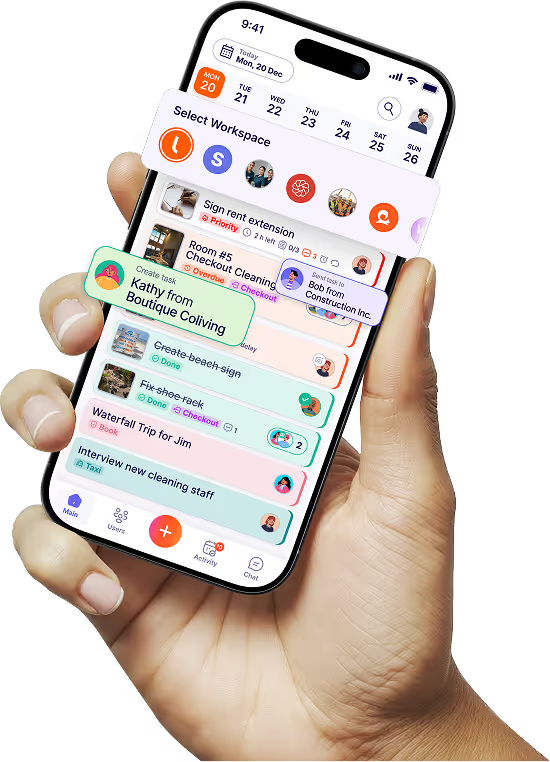
- Visual, multilingual task apps that don’t rely on long text
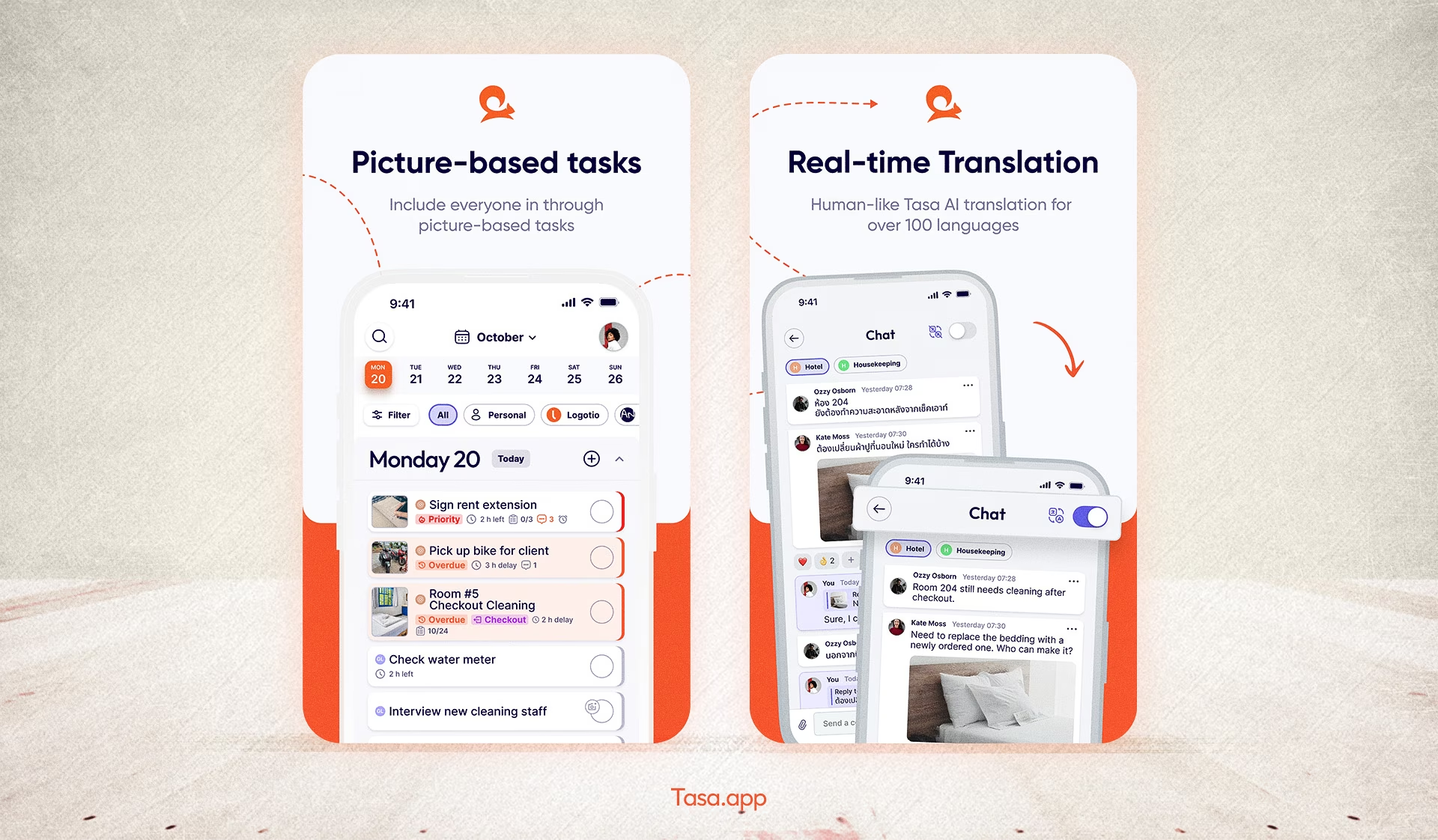
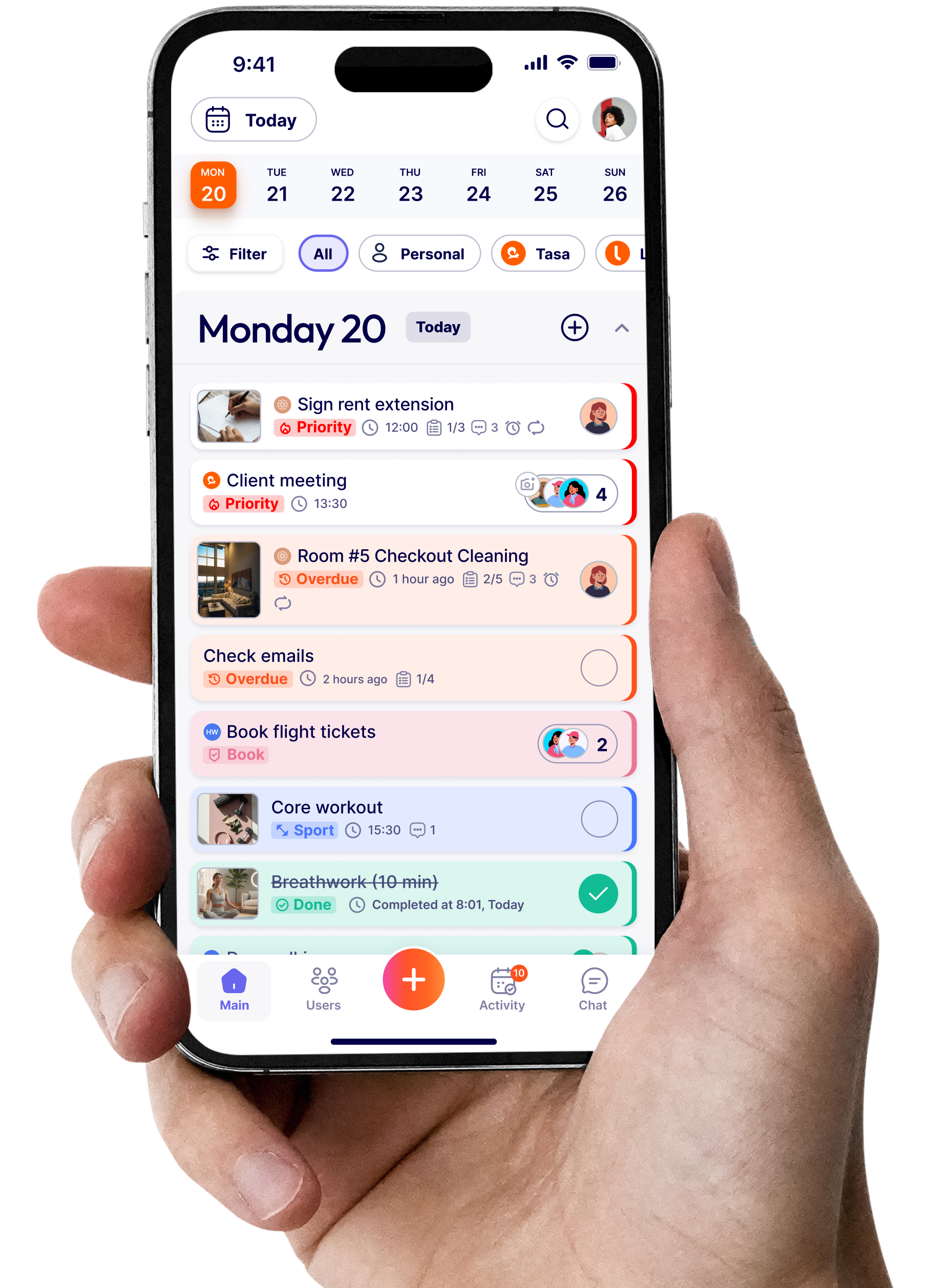
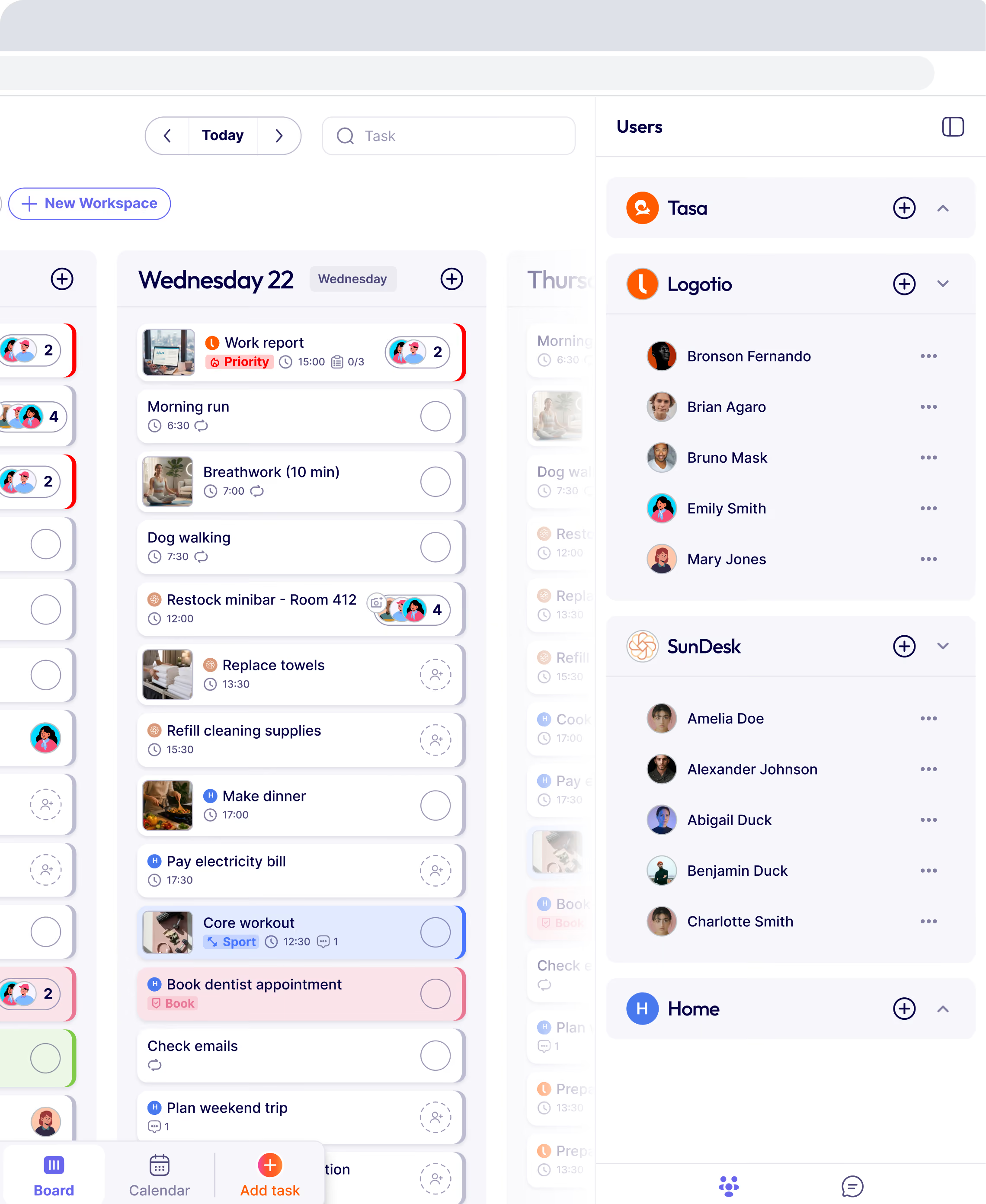
Tasa excel in this area. Instead of sending long written lists, managers create picture-based checklists that anyone can follow, with visual steps, AI translation, and photo or video proof of work done.
Visuals are a universal layer that helps low-literacy staff, multilingual teams, and even busy expats managing different projects.
Encourage feedback and two-way clarification
A lot of damage happens because team members are afraid to ask questions. The safest teams communicate effectively by making clarification a routine, not a confession.
To encourage feedback create:
- Rituals in meetings (“any questions before we proceed?” and give silence time)
- A norm where managers explicitly invite clarification and repeat-back (“Can someone restate the key steps we just agreed on?”)
Psychological safety is a huge part of reducing language barriers in business, and it starts with better frontline employee communication habits.
Measure and iterate like any other business process
Treat communication as an operational domain.
Track:
- Error rates tied to miscommunication
- Onboarding time for multilingual hires
- Customer satisfaction in multilingual markets
- Staff engagement and retention among non-native speakers
Review quarterly. If metrics aren’t improving, adjust your training approach, tool stack, policies and expectations.
According to Workplace Communication Statistics (2025), companies that regularly assess their communication landscape see measurable improvements in clarity and collaboration.
The 7 barriers to communication and where language fits
Communication theory usually lists seven barriers, and knowing them helps you see which ones you can actually fix. The classic list:
- Physical barriers, such as distance, noise on a job site, or bad connections
- Language barriers, meaning different languages, vocabulary, or literacy levels
- Perceptual barriers, where assumptions and stereotypes distort the message
- Cultural barriers, including norms about hierarchy, directness, and silence
- Emotional barriers, such as fear of speaking up in a second language
- Organizational barriers, like silos, unclear ownership, and missing channels
- Attitudinal barriers, when people simply do not want to understand each other
Language sits at number two, but it multiplies the others: a noisy warehouse plus a second-language instruction plus fear of asking questions is how safety incidents happen. That is why the most effective fixes pair language support with visual channels and psychological safety, not vocabulary training alone.
Common examples of language barriers in business
Examples make this concrete. The ones below come up again and again in multilingual companies:
- A cleaning crew ticking off a checklist in English they only partly read, so the deep-clean step is skipped
- A Spanish-speaking site supervisor receiving Arabic voice notes and guessing the priority from tone
- An invoice query lost between a German accountant and a Thai supplier, each writing in their own language
- Hotel staff nodding at a briefing they did not fully understand, then preparing rooms the wrong way
- Jargon and acronyms ("circle back on the SLA before EOD") that exclude non-native speakers even in one shared language
- Idioms, humor, and strong dialects that translate literally, such as "let's table this", which means opposite things in US and UK English
Notice the pattern: most examples are not about grammar. They are about instructions, priorities, and confirmation getting lost between languages, exactly where picture-based checklists and translation tools change the outcome.
Can an employer restrict employees from speaking their native language at work?
Generally no, not as a blanket rule. In the US, English-only policies are only lawful in narrow cases where speaking a shared language is genuinely required by business necessity, such as safety coordination during a lift. In the EU, employees keep broad rights to use their native language, and blanket bans invite discrimination claims.
The practical answer for multilingual teams is smarter: standardize the language for official documents and safety-critical communication, then let people speak whatever language gets the work done between themselves. Tolerance here is not just legal hygiene, it is how you keep bilingual staff engaged instead of pushing them out.
Building a culture that supports cross-cultural communication
Solving language barriers in business is not only about tools and training. It’s the work environment you build around them.

Build cultural intelligence
Encourage your people to understand:
- How different cultures handle hierarchy, feedback, and disagreement, since a direct communication style reads as honesty in one country and rudeness in another
- Differences in non-verbal signals (eye contact, gestures, silence)
- Local holidays, customs, and taboos
You can do this through short cultural briefings and role-play workshops
Studies on cross-cultural communication in the workplace show that cultural intelligence can significantly reduce misunderstandings and increase trust.
Celebrate diversity instead of tolerating it
Practical inclusion tactics:
- Mentorship/buddy programs pairing people across languages or locations
- Language days or informal events where employees share phrases, food, or stories
- Multilingual signage and training materials in high-risk environments (warehouses, kitchens, job sites)
This turns language differences from a source of friction into a visible strength.
Language barriers in multilingual business aren’t going away. But with deliberate leadership, better training, and the right mix of tools especially visual, multilingual systems for frontline work, you can move from “hoping they understood” to knowing your message landed and your team can act on it.
Latest News


Have questions?
.svg)
Team management, simplified.

“It affects my personal life a lot. I can manage my team and my work remotely, so I have more time being a mother.”
